Article
Outer space: What goes up must come down
How large are the forces acting on a gymnast swinging on the high bar?
How large are the forces acting on a gymnast swinging on the high bar?
Insurance companies offer protection against rare but catastrophic events like hurricanes or earthquakes. But how do they work out the financial risks associated to these disasters? Shane Latchman investigates.
That geometry should be relevant to physics is no surprise — after all, space is the arena in which physics happens. What is surprising, though, is the extent to which the geometry of space actually determines physics and just how exotic the geometric structure of our Universe appears to be. Plus met up with mathematician Shing-Tung Yau to find out more.
This article is based on a talk I gave at the recent John Cage exhibition in the Kettles Yard gallery in Cambridge. Cage is perhaps best known for his avant-garde music, particularly his silent 1952 composition 4′33″ but also for his use of randomness in aleatory music. But Cage also used randomness in his art.
Florence Nightingale died a hundred years ago, in August 1910. She survives in our imaginations as an inspired nurse, who cared passionately for injured and dying soldiers during the Crimean war, and then radically reformed professional nursing as a result of the horrors she witnessed. But the "lady with the lamp" was also a pioneering and passionate statistician. She understood the influential role of statistics and used them to support her convictions. So to commemorate her on the centenary of her death, we'll have a look at her life and work as a statistician.
A group of school students-turned-researchers has delivered new data that will help scientists stem the spread of infectious diseases. A study designed by the students reveals social contact patterns among primary schools students. This type of information is crucial in mathematical models of how diseases spread, which can be used to test the effects of interventions like vaccination and school closures. The study was based on specially designed questionnaires which were handed out to primary schools and achieved an unprecedented response rate of nearly 90%.
Quantum mechanics is usually associated with weird and counterintuitve phenomena we can't observe in real life. But it turns out that quantum processes can occur in living organisms, too, and with very concrete consequences. Some species of birds use quantum mechanics to navigate. And as Plus found out at a recent conference, studying these little creatures' quantum compass may help us achieve the holy grail of computer science: building a quantum computer.
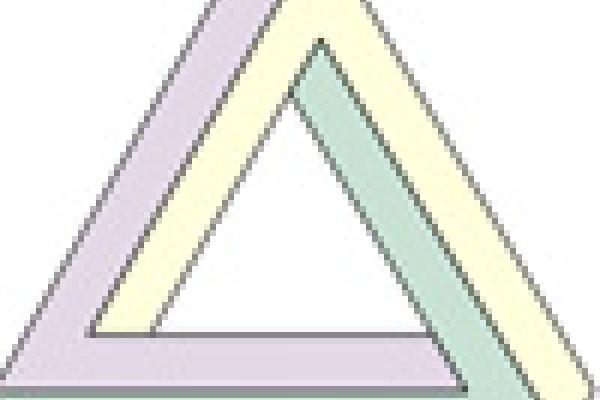
When your eyes see a picture they send an image to your brain, which your brain then has to make sense of. But sometimes your brain gets it wrong. The result is an optical illusion. Similarly in logic, statements or figures can lead to contradictory conclusions, which we call paradoxes. This article looks at examples of geometric optical illusions and paradoxes and gives explanations of what's really going on.
Mr and Mrs Magnus are a happy gnome couple. Unfortunately, foreseeing that they will be unable to keep up with their rising mortgage repayments, they've been forced to move into my back garden, where they've acquired a plot to build a house on. Gnome by-laws state that the total number of bricks used in any construction project must be 177 or planning permission will not be granted. How can they manage to stick to the rules?
What happens when magnetic fields get tangled up in knots? This does happen in the Sun's atmosphere and mathematical models predict that once the magnetic field becomes tangled, it must retain some vestige of this complexity for a long time. This enables the storage of vast quantities of energy. In this article I will outline how the notion of magnetic topology helps us to understand the physical situation and draw such conclusions.
Benoît Mandelbrot, the father of fractal geometry, died last Thursday at the age of 85. Born in Poland in 1924, Mandelbrot had dual French and American citizenship and spent most of his working life in the US. He died of cancer in a hospice in Cambridge, Massachusetts.
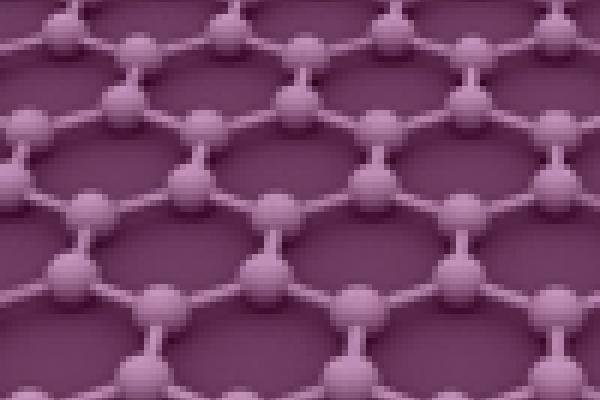
Well, it goes to no-one because there isn't a Nobel Prize for maths. Some have speculated that Alfred Nobel neglected maths because his wife ran off with a mathematician, but the rumour seems to be unfounded. But whatever the reason for its non-appearance in the Nobel list, it's maths that makes the science-based Nobel subjects possible and it usually plays a fundamental role in the some of the laureates' work. Here we'll have a look at two of the prizes awarded this year, in physics and economics.